This September 19, the webinar "Sustainable livestock farming in tropical Andean countries", made by Tropical Forest Alliance y Climate GroupThe company's activities was presented at Climate Week in New York.
The purpose of the meeting was to highlight the progress made in sustainable tropical livestock production in Bolivia, Colombia, Ecuador and Peru, where there are multi-stakeholder platforms that are helping to catalyze these transition processes. It also emphasized the importance of promoting the participation of livestock producers, the private and public sectors, and mobilizing greater resources and actions to accelerate the transformation.
Livestock activity plays a key role in the climate transition. In the biomes of tropical Andean countries, greenhouse gas (GHG) emissions are not only linked to direct activity (e.g. enteric fermentation) but also to emissions associated with land use change. Therefore, the challenge is to reduce the link between livestock farming and deforestation. With this vision, some countries in the region seek to address livestock farming under a regenerative and/or sustainable approach, as a holistic management strategy that can contribute to ecosystem recovery and mitigate the effects of climate change, through soil health and increased emissions capture.
Characteristics of livestock farming in tropical Andean countries
As highlighted in the webinar, tropical livestock production in Bolivia, Colombia, Ecuador and Peru has three main characteristics. The first is that tropical livestock farming involves a majority percentage of small and medium-sized producers, generating a heterogeneous production structure and a broad base of actors in the sector.
The second is that livestock productivity in this region is low. However, there is great potential for productive improvement, without the need to expand current production areas. Millions of hectares of deforested and degraded land can be restored and used sustainably for livestock development, opening up opportunities for growth without additional deforestation.
Finally, animal products play a crucial role in the national food supply in Bolivia, Colombia, Ecuador and Peru. These products are fundamental to promoting a nutritious, healthy and varied diet, especially in regions where food security is being improved.
Solutions for the transition to sustainability
In livestock farming in the Andean countries, there are already sustainable models whose efficiency has been widely proven. The implementation of mixed production systems, such as agroforestry and silvopastoral systems, together with good farm management practices and crop and species diversification, has proven to be effective. However, it is necessary to systematize and expand these practices to accelerate the sector's transition and thus its positive impact on producers and the environment. To achieve this, the establishment of enabling conditions is required.
Mainly, a comprehensive set of policy measures that promote efficient land use, land management, and financing and development of incentives to increase sustainability and productivity in the livestock sector. This should be accompanied by the development of information capacities and tools for monitoring and traceability, technical support, research and livestock extension, as well as incentives for area conservation and differentiated market development strategies.
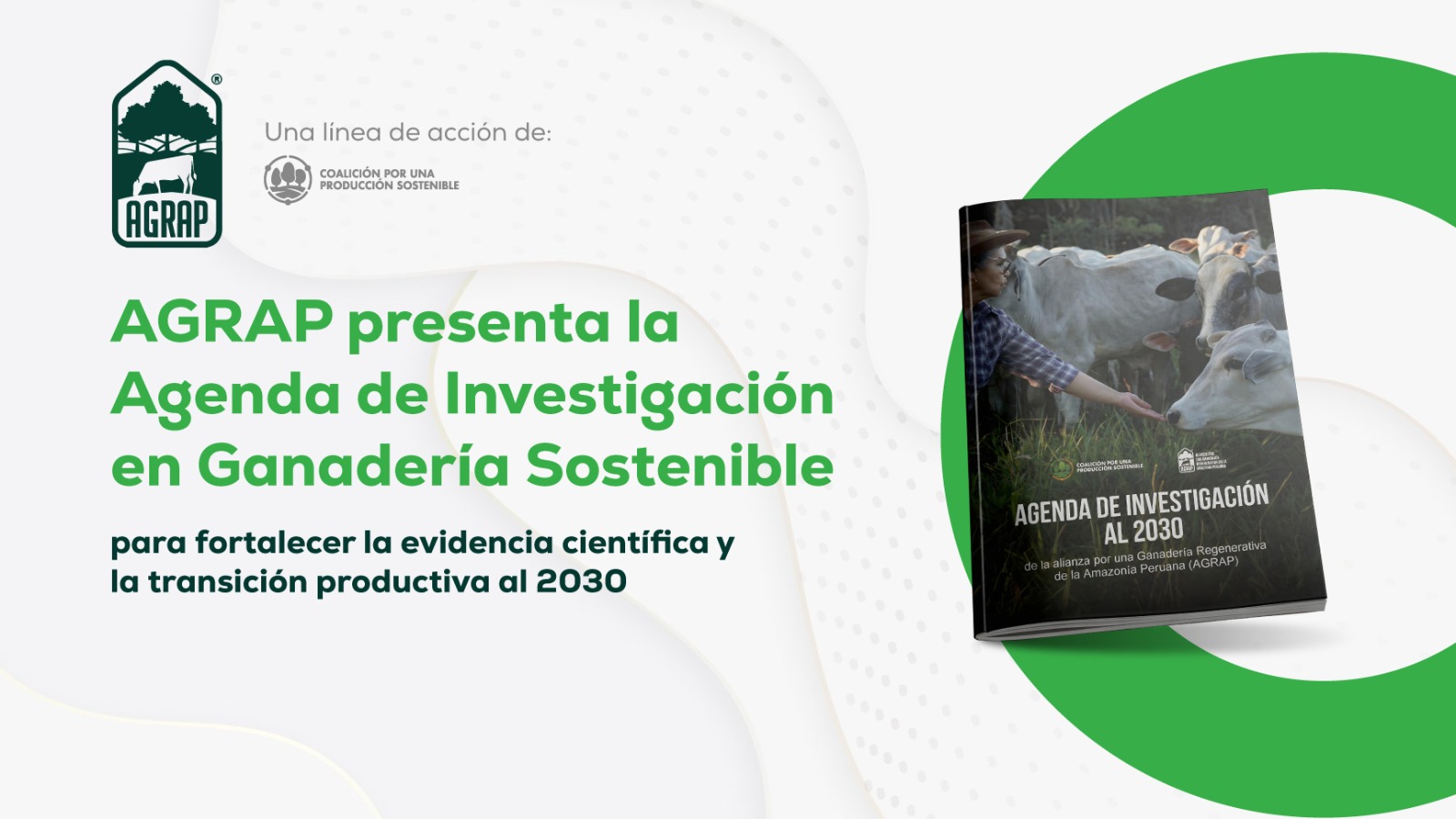
Finally, the webinar highlighted the importance of collective action. The successful implementation of these solutions requires a collaborative approach involving governments, cooperation organizations, civil society, the private sector, the financial sector and academia. Multi-stakeholder platforms in operation in tropical Andean countries, such as the Bolivian Roundtable for Sustainable Meat, the Mesa de Ganadería Sostenible Colombia, ProAmazonia of Ecuador (a program of the Ministries of Environment, Water and Ecological Transition and of Agriculture and Livestock, implemented with UNDP support) and the Alliance for Regenerative Livestock in the Peruvian Amazon (AGRAP)several of them linked to the Global Roundtable on Sustainable Meatare spaces that actively contribute to energize the sustainable transformation of livestock farming and take advantage of the enormous potential of this sector to contribute to solving important environmental challenges such as climate change mitigation, soil degradation and biodiversity loss.