In the search for competitive and deforestation-free development in the coffee and cocoa production chains, Solidaridad and the Business Alliance for Amazonia (an initiative of USAID, the Government of Canada and Conservation International Peru), within the framework of the Coalition for Sustainable Production and Conservation (CSPC). Cocoa, Forest and Diversity Agreementconducted a study that assesses the impacts on the coffee and cocoa value chains of European Union regulation on deforestation-free products. In addition to seeking to comply with European regulations, the gaps identified are an opportunity to improve the profitability of producers through services that boost their productivity and quality and incentives for sustainable production, without deforesting the forest.
Some key ideas
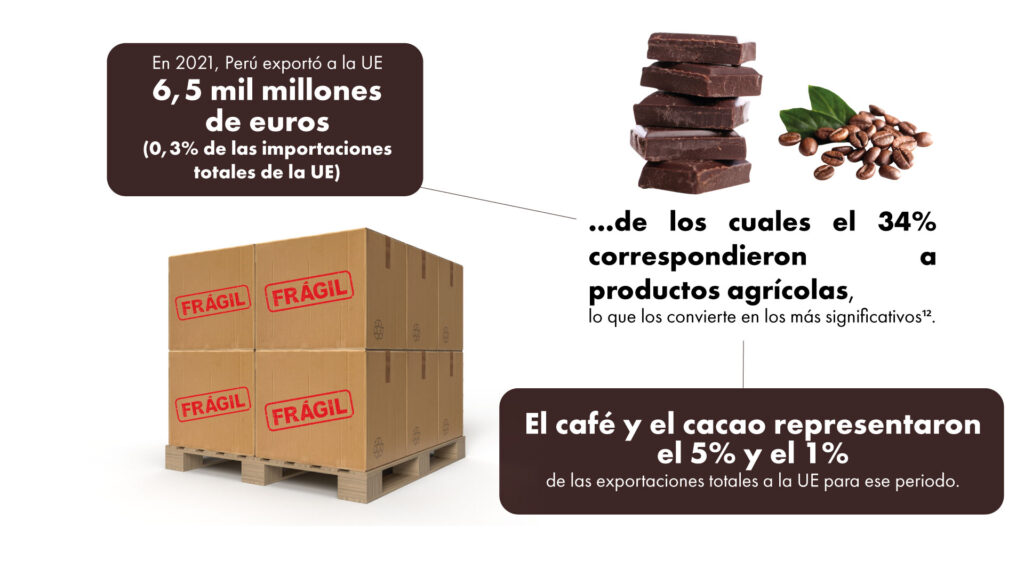
Coffee and cocoa are the crops most exposed to EUDR: By 2022, 51% of exports in FOB value of coffee and 29% in the case of cocoa are destined for European Union countries. This makes these two sectors highly sensitive to this new regulation in Peru.
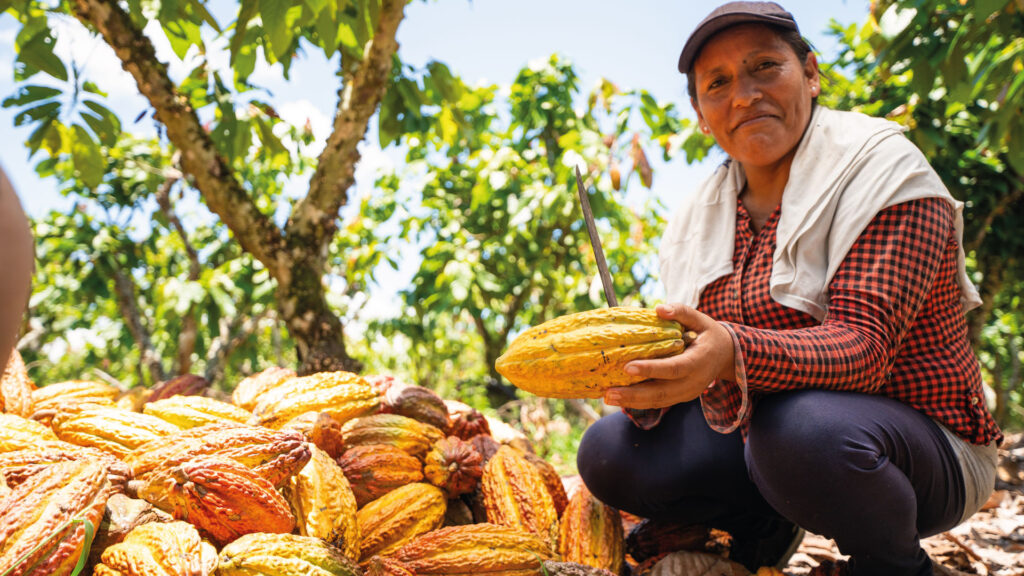
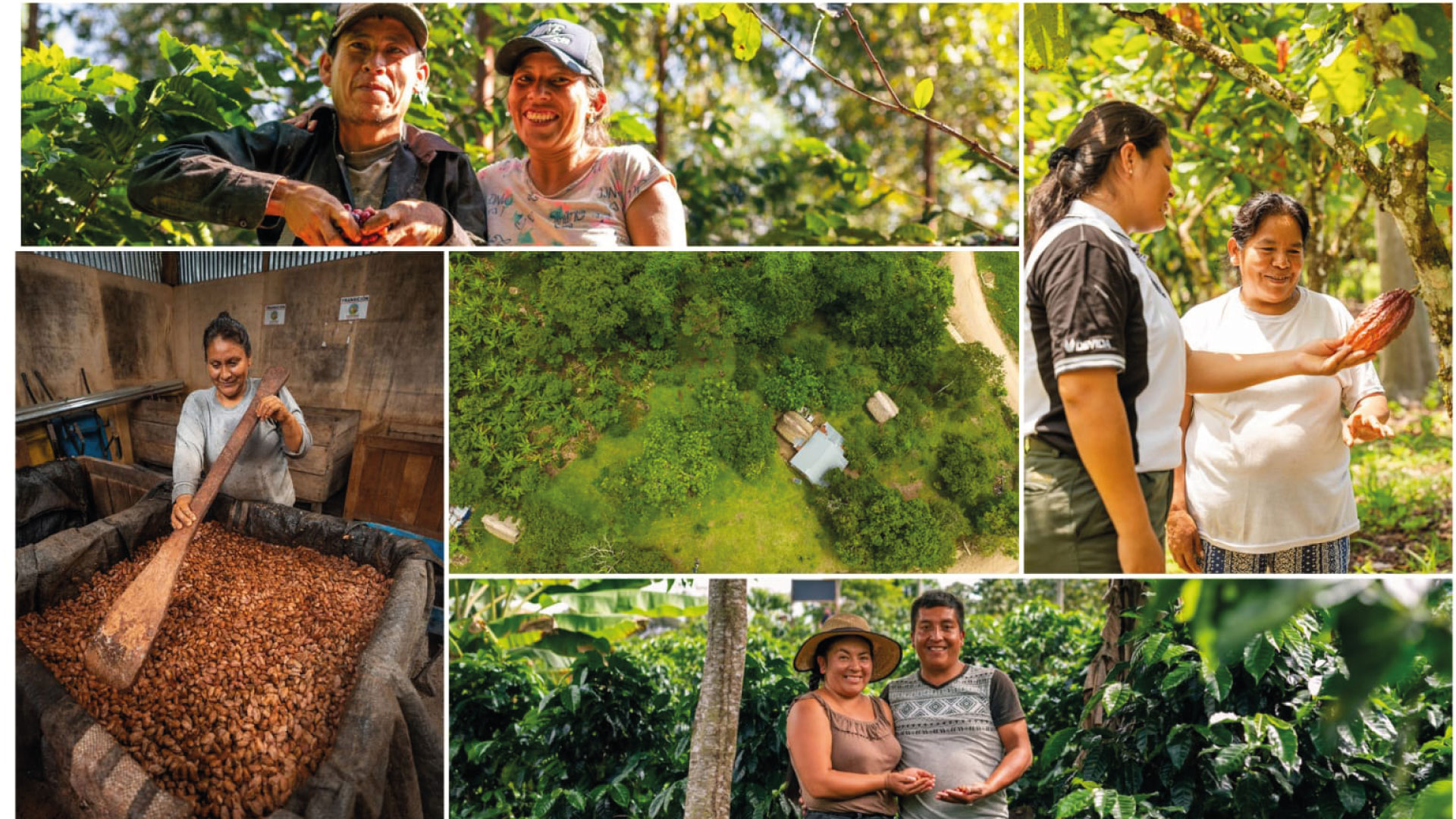
Production in the hands of small producers: 95% of national coffee and cocoa production is managed by 313,000 smallholder families. This poses an enormous challenge for EUDR preparedness given the heterogeneity of actors with whom to coordinate and the complex processes that need to be addressed.
Level of preparation: Although the coffee and cocoa sectors are not currently prepared for the EUDR, there is collaboration between the public and private actors involved to maintain exports of these sectors to this important market. In addition, this would allow the country to be prepared for the regulations of other countries such as the United States and the United Kingdom, which are preparing actions similar to the EUDR.
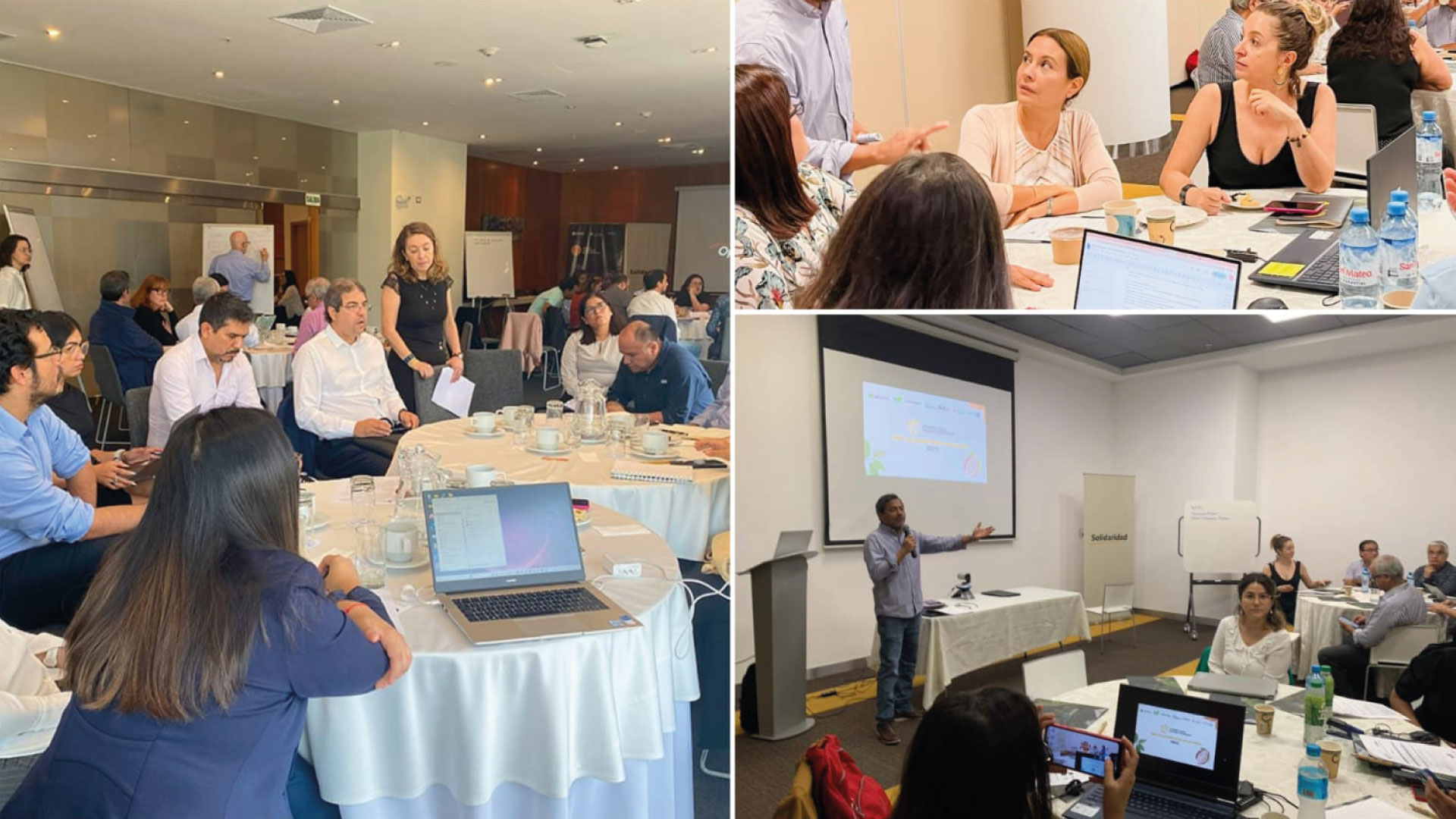
Road map of San Martín:A multi-stakeholder dialogue process led to the preparation of a road map that identifies the main bottlenecks and challenges that the San Martin region will face in the transition to deforestation-free agriculture.
Formalization:Currently, around 500 family farms have been formalized through the CUSAFs. There is a need to make rapid progress with the formalization of properties while at the same time safeguarding forest conservation.
95% of national coffee and cocoa production is managed by 313,000 smallholder families.
In the context of this standard, an important requirement for entry into the EU is information on the origin of the production of producers covered by the EUDR. In this situation, the following has been identified:
Advance: Actions by the Peruvian State
The Ministry of Agrarian Development and Irrigation (MIDAGRI) has made progress: the Register of Agricultural Producers and its associated technological tools (observatory and digital identity application). This is the national database that seeks to provide updated and geo-referenced information on all producers. Peruvian agrarian farmers.
Findings from multi-stakeholder dialogues :
The transition to deforestation-free agriculture requires a systemic approach that addresses the gaps in legal security, health, associativity, monitoring and traceability, positioning and sustainability.
It is necessary to strengthen regional articulation, cooperation and coordination in order to implement joint actions to overcome these gaps.
Women producers face specific challenges in the transition to deforestation-free agriculture, which is why it is necessary to design specific actions to support them.