ExpoAmazon Expo 2023: Stakeholders in production chains stress the importance of deforestation-free agricultural production

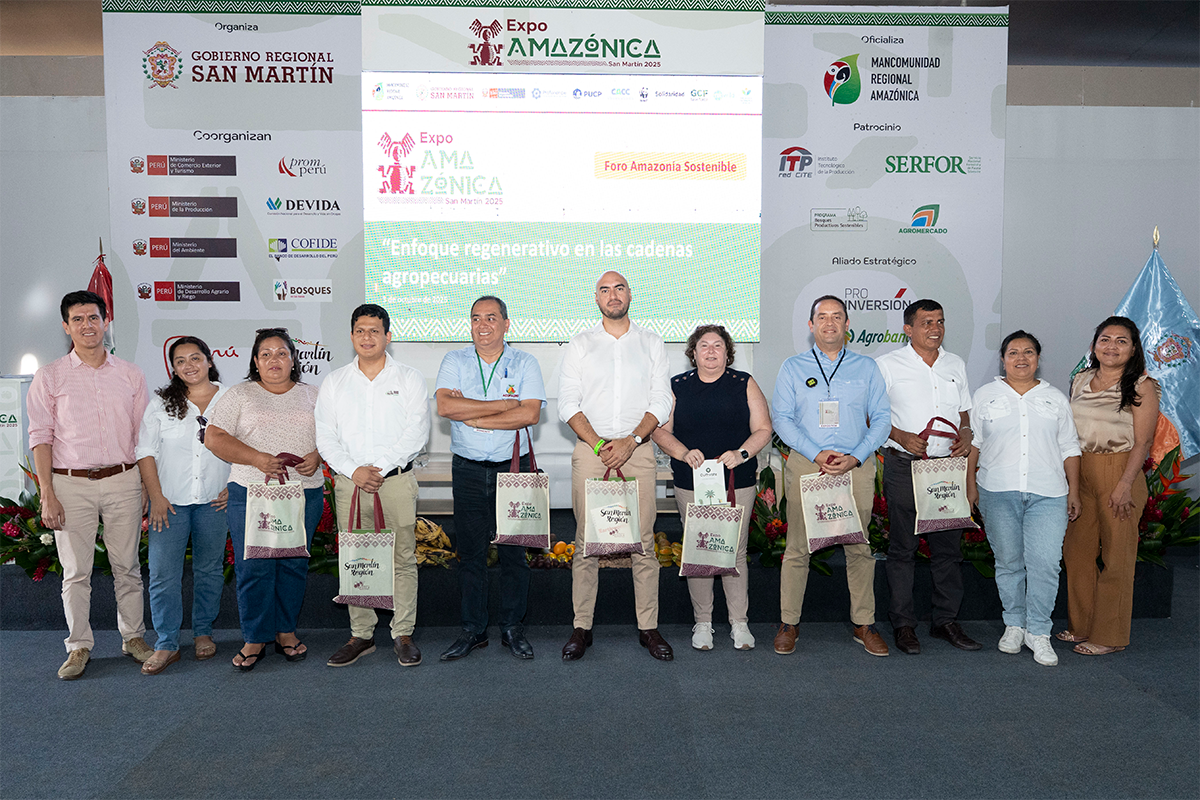
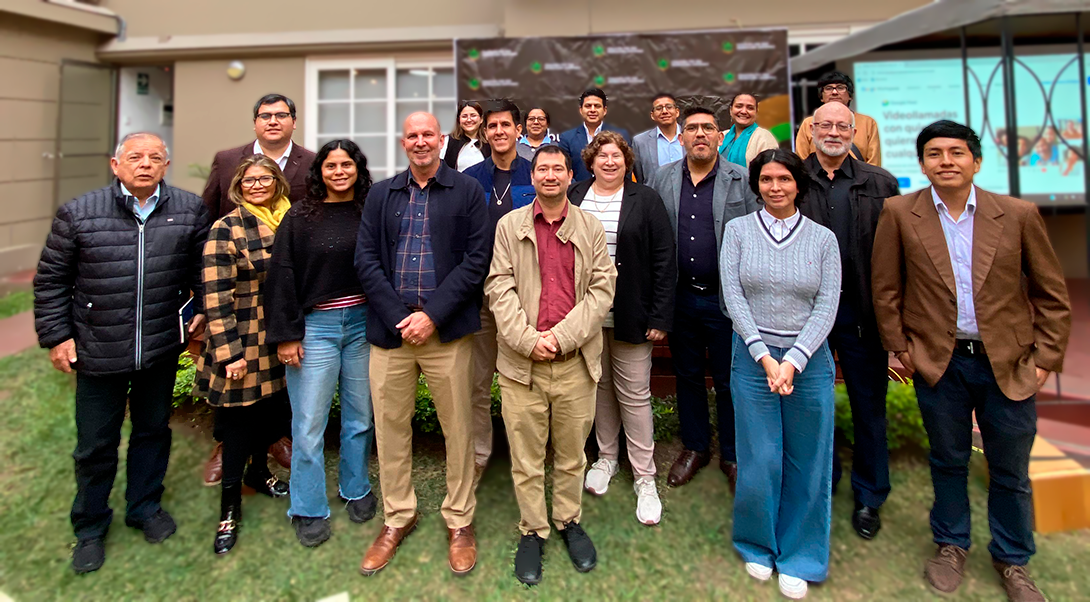
ExpoAmazonica is an annual event that brings together decision-makers, public officials and entrepreneurs, providing an ideal space to foster national dialogue around the development of the Peruvian Amazon. In recognition of the crucial role of agricultural development in the Amazon, ExpoAmazonica 2023 included the Forum "Towards Competitive and Sustainable Agricultural Production in the Peruvian Amazon" on September 23 in Tingo Maria, Huanuco, organized by the Earth Innovation Institute and the Alternative Development Mechanisms (GCF Task Force) within the framework of the Coalition for Sustainable Production. At this forum, various actors from key value chains in the Amazon, such as cacao, coffee, livestock and oil palm, demonstrated their commitment and recognized the importance of producing sustainably and free of deforestation.

The forum looked forward topromote the interregional dialogue on agricultural development in the Amazon, sharing experiences and instruments for competitive and sustainable agriculture and livestock farming, and strengthening alliances between regional governments, ministries, national technical agencies, companies, agricultural cooperatives, universities and civil society.

The forum showcased cases of best practices, as well as the challenges and opportunities of value chains such as livestock, cocoa, oil palm and jurisdictional initiatives:

Regenerative cattle ranching in the Peruvian jungle

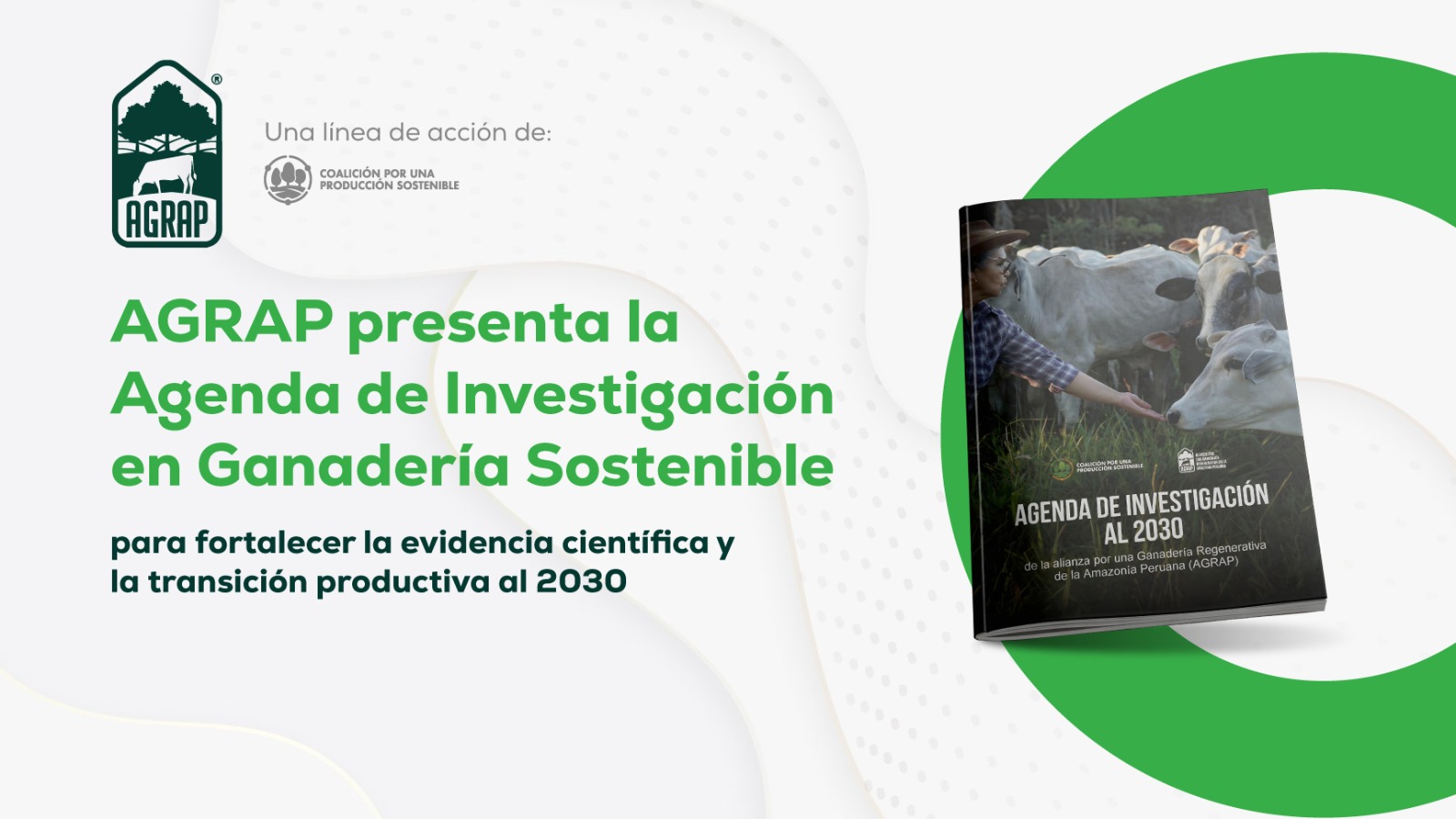
The progress regarding regenerative livestock farming was shared during the block of "Presentations of success stories by region and at the national level". During the presentation, it was showed the implementation of the soil regeneration approach through livestock farming in Madre de Dios through field schools and demonstration plots. promoted by WWF. The existence of the Alliance for Regenerative Livestock in the Peruvian Amazon, which promotes the development of markets, the implementation of sustainable production models, traceability and research and knowledge management, was also highlighted.

It should be noted that during the forum the Regional Director of Agriculture of Madre de Dios also participated in the "Round of contributions under the territorial roundtables". to highlight the challenges and opportunities for Amazonian agricultural development from the perspective of their region. There, the Rrhe underscored the insufficient technology to enhance productive improvement and profitability, to encourage generational replacement and to provide a business perspective to livestock farming. He also stressed the need to define guidelines and incentives to support the agricultural sector, develop appropriate financial instruments and have a joint, articulated and strategic vision to address actions such as the on topics such as genetic improvement, technical assistance and institutional strengthening.

In this regard, AGRAP is aligned with these challenges and opportunities identified by the region, which is why it continues to promote regenerative livestock farming through field schools, preparation of business plans, the first proof of concept in the region of a verification framework for sustainable livestock farming in the Peruvian Amazon, technical studies on the market and public financial instruments, among others.

Cocoa in the face of European regulation

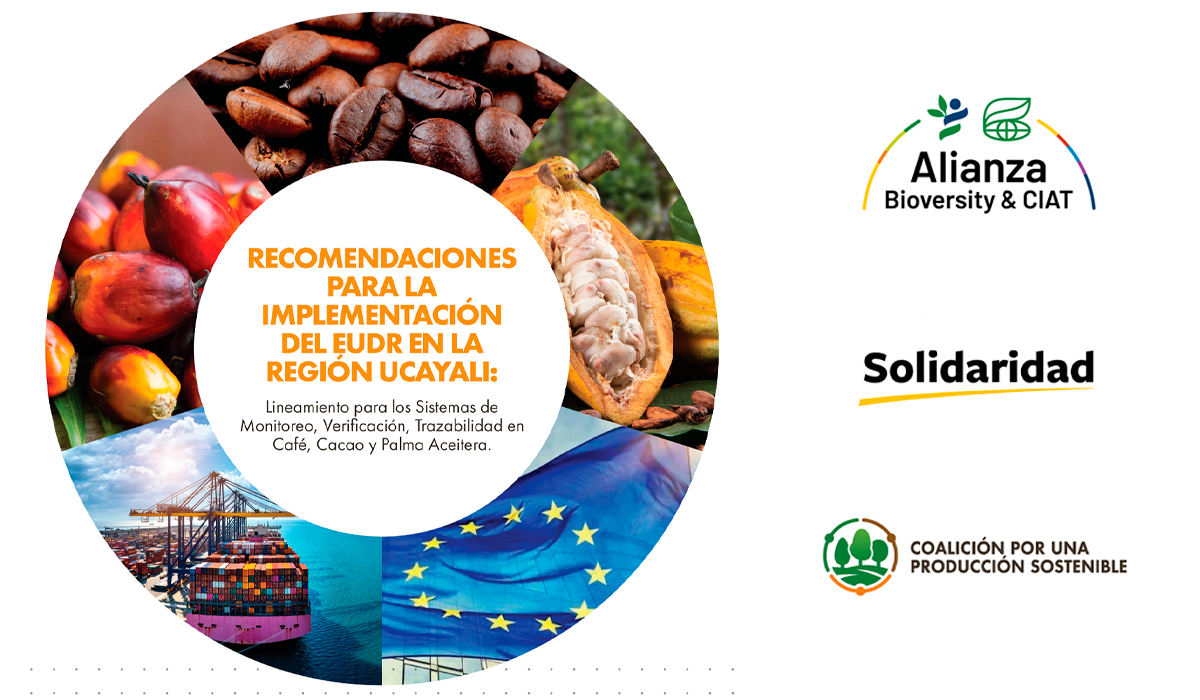
In the area of the cocoa value chain, a presentation was made of the Cocoa, Forest and Diversity Agreement as a collective effort by the sector to comply with the new European market regulations on imported deforestation. In this regard, the Agreement has made it a priority to help stakeholders to be prepared for European regulations on issues such as compliance with the legal framework, establishment of polygons, monitoring and traceability, as well as increasing the profitability of cocoa activities. 

To this end, the Agreement has an action plan and has undertaken actions to socialize and link regional spaces more closely, such as the cocoa technical roundtables of San Martin and the VRAEM. It has also led a study on the impact of European regulations on cocoa and coffee with the support of Solidaridad (technical secretariat of the Agreement) and Conservation International. 

Challenges and opportunities towards deforestation-free oil palm

In the case of oil palm free of deforestation to promote sustainable development in the oil palm industry, it is Oscar Neyra, COCEPU's Oscar Neyra, pointed out that it is It is essential to establish training programs and to transform obsolete conceptions about technological practices. In this context, the need for investment to move towards sustainable palm production was emphasized. In this regard, the organic palm production pilot project carried out by the COCEPU organization in Ucayali was highlighted as part of the innovation and generation of added value to production. 


In terms of opportunities, it was noted that although the market currently has stricter requirements, it offers differentiated prices for sustainably produced palm. 


The report also mentions opportunities related to new projects and initiatives driven by civil society and the private sector, aimed at achieving environmentally friendly palm production that meets high sustainability standards.. Along these lines, we should point out the work of the Coalition's sustainable oil palm advocacy group, made up of Solidaridad, Earth Innovation Institute, Earthworm, Proforest and TFA. 

Tocache Jurisdictional Initiative

Finally, it was noted that the San Martin region is carrying out a process to strengthen governance and territorial institutions. This is a multi-stakeholder alliance aimed at transforming this province into a benchmark for sustainable production in the Peruvian Amazon. This initiative is based on a shared vision, an action plan, governance mechanisms, landscape monitoring and incentive systems. The goal for 2030 is to achieve sustainable value chains and landscapes that guarantee legal and food security. To achieve this goal, the importance of working in a coordinated manner and establishing alliances with the various actors involved in the process is emphasized. In addition, a portfolio of sustainable investments in the province is being built with the support of the Earth Innovation Institute and TFA.

Facebook
Twitter
LinkedIn
WhatsApp