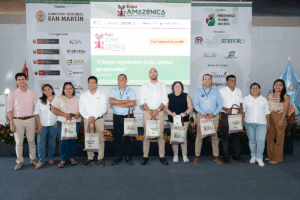
On Tuesday, March 19, the seminar "Incentive Generation for Coffee and Cocoa Producers in the Context of the EUDR" took place, organized by the German Development Cooperation, implemented by the German Agency for Economic Cooperation and Development (ADC). GIZwith the support of Solidaridad y Tropical Forest Alliance (TFA) within the framework of the Cocoa, Forest and Diversity Agreement (an initiative of the Coalition for Sustainable Production). The event was held in the framework of the 2026 Action Plan of the Cocoa, Forests and Diversity Agreement, with the purpose of exchanging progress regarding financial and non-financial incentives for coffee and cocoa producers in the context of the European regulation on deforestation-free products or EUDR for short.
The objective of the EUDR, as David Rusnok emphasized, is for importers in the European market of products such as coffee, cocoa and palm (among others) to verify that they are not related to deforestation.
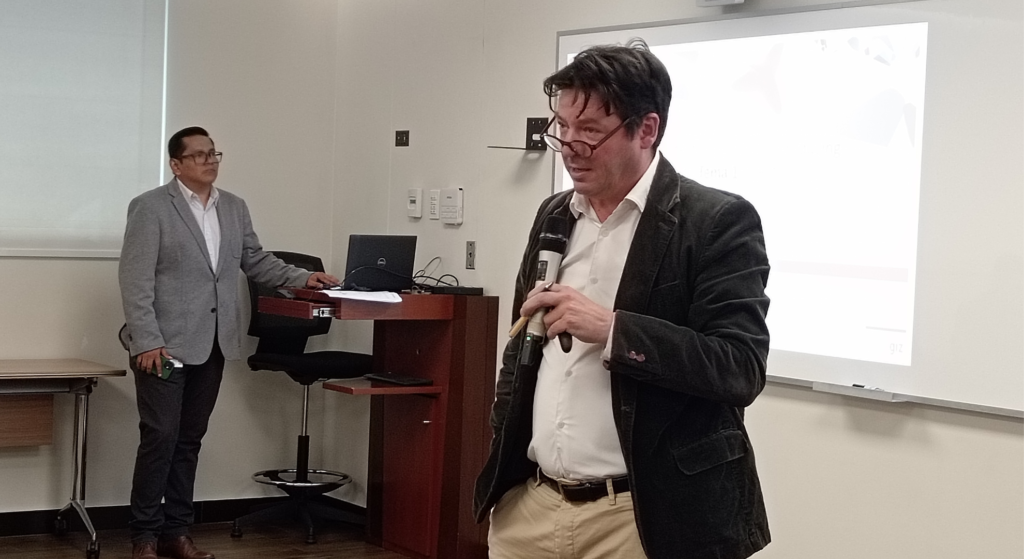
In this context, according to the panel of experts, small and medium coffee and cocoa producers face a series of challenges to maintain the destination of their production to international markets. These include overcoming informality, lack of organization, low schooling and lack of clear standards. This is why they require support in the form of financial and non-financial incentives.
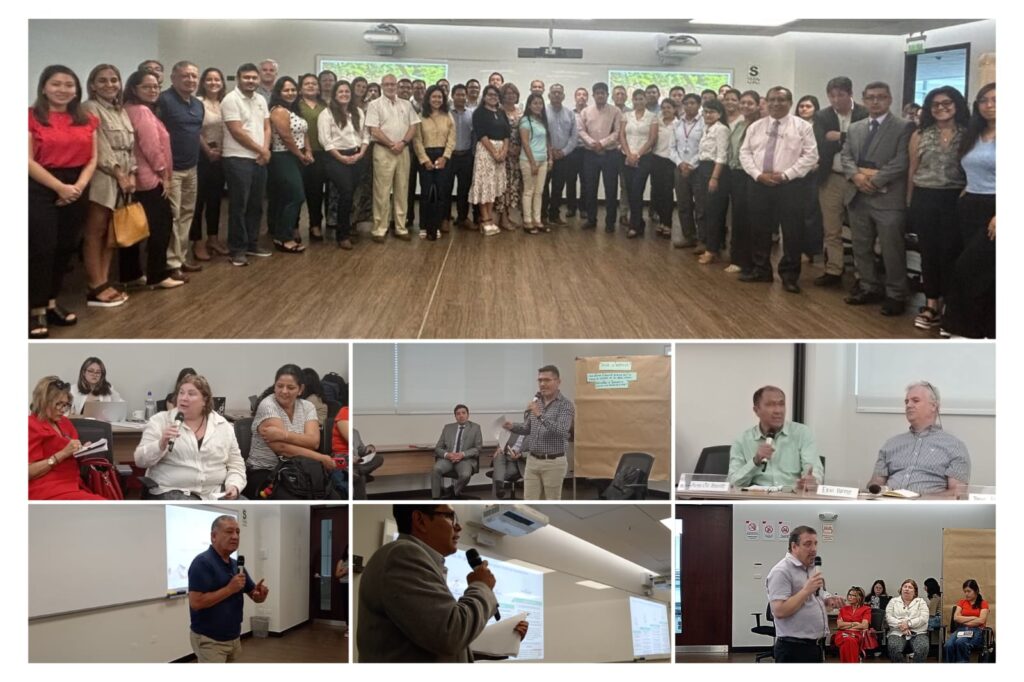
In response to this need, Jorge Fidel Castro, Advisor to the Executive Directorate of the Agroideas Compensation Program for Competitiveness, proposed non-refundable co-financing for small and medium-scale agriculture, as well as technical assistance and the implementation of entrepreneurship plans for rural and indigenous women. However, Jorge Lazo, Professor at ESAN University, indicated that giving general credits has been one of the biggest mistakes made: according to the speaker, these should be given to those farmers who are willing to receive technical training and implement technological innovations on seeds (genome), irrigation and nutrition, among others.
On the other hand, regarding the thematic axis of monitoring, Rafael de los Ríos, National Consultant for WRI/Global Forest Watch Pro, mentioned that maps can facilitate non-deforestation´s traceability. Considering the technological and economic gap, this platform seeks to simplify the observation of geospatial data, as well as the review of alerts and statistical reports on a space in a given year. In other words, it facilitates the monitoring of the sustainability in the coffee and cocoa production, which can also be carried out by specialized users in other sectors; such as the financial sector, which already uses Global Forest Watch Pro in Argentina to monitor the compliance of its credit clients with sustainability criteria (non deforestation).
The event concluded that both public and private sector groups share an interest in facilitating tools and actions such as those mentioned above so that cocoa and coffee producers in Peru have the necessary tools to achieve sustainable, deforestation-free production that complies with the new international market regulations. The challenge still lies in strengthening work synergies in the territory in order to benefit small and medium Peruvian producers in a coordinated manner.